The Advanced Diploma in Islamic Scholarship & Leadership (ADIL) is a unique and innovative program that combines a commitment to the Islamic scholarly tradition, academic rigor, and an emphasis on khidma (service) and leadership. By the end of the ADIL Program, students will be equipped with a set of necessary, robust, and effective tools that will allow them to contribute to the advancement of the Islamic intellectual enterprise and serve as thought and community leaders at various scales.
The Vision Behind the Advanced Diploma in Islamic Scholarship and Leadership
The Advanced Diploma in Islamic Scholarship and Leadership has been inspired, since day one, by the two towering figures of Islamic scholarship and leadership of the 20th century: Shaykh ‘Abd al-Fattāḥ Abū Ghudda and Shaykh Abū al-Ḥasan al-Nadwī (may Allah be pleased with them). The contributions of these two icons to Islamic scholarship, and their leading roles in da‘wa and khidma (service) to the Muslim Umma, animate the spirit of the ADIL Program.
The Advanced Diploma in Islamic Scholarship and Leadership is a program for students who seek to equip themselves with the requisite skills and tools to contribute to Islamic scholarship and their respective communities. To that end, the ADIL Program offers students access to a network of top-tier faculty from elite institutions who will teach a carefully designed curriculum. While the ADIL Program emphasizes academic rigor, critical analysis, and scholarly output, it rests on three faith-based pillars that represent its guiding principles and values:
The Advanced Diploma in Islamic Scholarship and Leadership is a program for students who seek to equip themselves with the requisite skills and tools to contribute to Islamic scholarship and their respective communities. To that end, the ADIL Program offers students access to a network of top-tier faculty from elite institutions who will teach a carefully designed curriculum. While the ADIL Program emphasizes academic rigor, critical analysis, and scholarly output, it rests on three faith-based pillars that represent its guiding principles and values:
Sunni Orthodoxy:
The ADIL Program maintains a commitment to the orthodox positions, which are subject to the consensus of Sunni scholars. While this still leaves ample space for diversity, debate, and free-thinking, it offers students the bedrock upon which their future scholarship and leadership will be built.
Umma-Centric Outlook:
The ADIL Program seeks to instill a sense of belonging and loyalty to the Muslim Umma at large. This stems from the belief that a Muslim scholar and leader must feel the pain and share the hopes of fellow Muslims around the world.
Khidma (Service):
Serving Muslims, at a local and global scale, is at the heart of the ADIL Program’s objectives. Depending on their interests and skills, students will seek to serve Islam and Muslims in various ways. The ADIL Program aims to direct students towards khidma streams and aid them in achieving their objectives.
The ADIL Program maintains a commitment to the orthodox positions, which are subject to the consensus of Sunni scholars. While this still leaves ample space for diversity, debate, and free-thinking, it offers students the bedrock upon which their future scholarship and leadership will be built.
Umma-Centric Outlook:
The ADIL Program seeks to instill a sense of belonging and loyalty to the Muslim Umma at large. This stems from the belief that a Muslim scholar and leader must feel the pain and share the hopes of fellow Muslims around the world.
Khidma (Service):
Serving Muslims, at a local and global scale, is at the heart of the ADIL Program’s objectives. Depending on their interests and skills, students will seek to serve Islam and Muslims in various ways. The ADIL Program aims to direct students towards khidma streams and aid them in achieving their objectives.
Why the Advanced Diploma in Islamic Scholarship and Leadership?
The Advanced Diploma in Islamic Scholarship and Leadership offers students a unique and superior learning experience. The ADIL Program is open to applicants worldwide. The ADIL Program has been meticulously designed over the past few years after extensive landscape assessments and broad consultations with leading Muslim academics, scholars, and community leaders. The result was the ADIL Program which offers the following experience:
World-class instructors
The ADIL Program will offer students the opportunity to learn from top-tier professors from elite institutions around the world. While most students can only gain access to such a calibre of instructors through a Ph.D. program, the students of the ADIL Program will be able to learn directly from such instructors at a level of depth and rigour that mirrors graduate studies at prestigious institutions. Through such instruction, students will be introduced to the academic literature and research in various Islamic fields and have the opportunity to critically engage with such material under the guidance of accomplished instructors.
A four-year part-time program
The part-time nature of the ADIL Program is designed to accommodate early to mid-career Muslim professionals and graduate students who, while harbouring a strong passion for contributing to Islamic scholarship and community service, seek to maintain their professional commitments. The ADIL Program offers two courses per semester. Over the course of eight semesters, students will complete 16 courses. Each course will involve two hours of instruction per week that will be held on weekends. Session timings will accommodate North American and European time zones.
In-person and virtual instruction
Ṣuḥba (companionship) and heart-to-heart learning is an essential feature of Islamic pedagogy. While most sessions will he held virtually to accommodate for a geographically dispersed cohort, the ADIL Program will involve in-person sessions that aim to build a spirit of brotherhood and sisterhood within the cohort, as well as a personal student-teacher relationship. At the start of each semester, the instructors will be flown in to Toronto, Canada, where the first six hours of class time will be held in-person.
International summer intensives
Each summer, a nine-day in-person intensive will be held at an international destination. The intensive will include a series of seminars on a selection of subjects taught by leading instructors that will augment the semester courses. In addition to the educational goals of the intensives, students will be able to strengthen their ṣuḥba (companionship) with one another. The purpose of the international destination is to connect students with the broader Muslim Umma, cultivate Umma-centric thinking, and open for the students a window into the history of Islam and Muslims at a global level. It will additionally be an opportunity for students to connect with the global network of Muslim scholars and instructors.
Personalized learning
With a small teacher-to-student ratio, the learning experience of the students will be highly personalized and flexible in order to meet their needs and aspirations. Each cohort will be accompanied by a student coordinator who will join and accompany the students throughout their journey. The coordinator will serve as a liaison between the students and the program’s administrators. This will allow the program’s administrators to respond to student feedback and aspirations with regards to course design, intensive modules, the courses offered during the summer intensives, and location of the summer intensives. The student coordinator will have a guiding and counselling role as he or she will guide students through their experience, hear their feedback and concerns, and offer them advice as needed. The student coordinator will also be available to answer questions pertaining to readings and class discussions.
Mentorship
Each student of the ADIL Program will have the opportunity to be matched with a mentor who will offer personalized one-on-one mentorship, guidance, and advice throughout the student’s journey. The student-mentor relationship will be one based on care and trust. This mentorship will offer each student an avenue to discuss, in confidence, matters pertaining to their studies, career paths and choices, research topics, and contentious questions that the student may otherwise not be comfortable raising in class or with others.
Start Your Application (Deadline: August 1st, 2024)
Students worldwide are welcome to apply. The ADIL Program holds an admission round once every two years. Prospective students are thus highly encouraged to apply for this admission round as the next round will be in 2026.
For inquiries, please email us at: [email protected]
Students worldwide are welcome to apply. The ADIL Program holds an admission round once every two years. Prospective students are thus highly encouraged to apply for this admission round as the next round will be in 2026.
For inquiries, please email us at: [email protected]
Faculty
Coursework
Fees & Tuition
Application Requirements
Application Procedure
Program Structure
FAQs
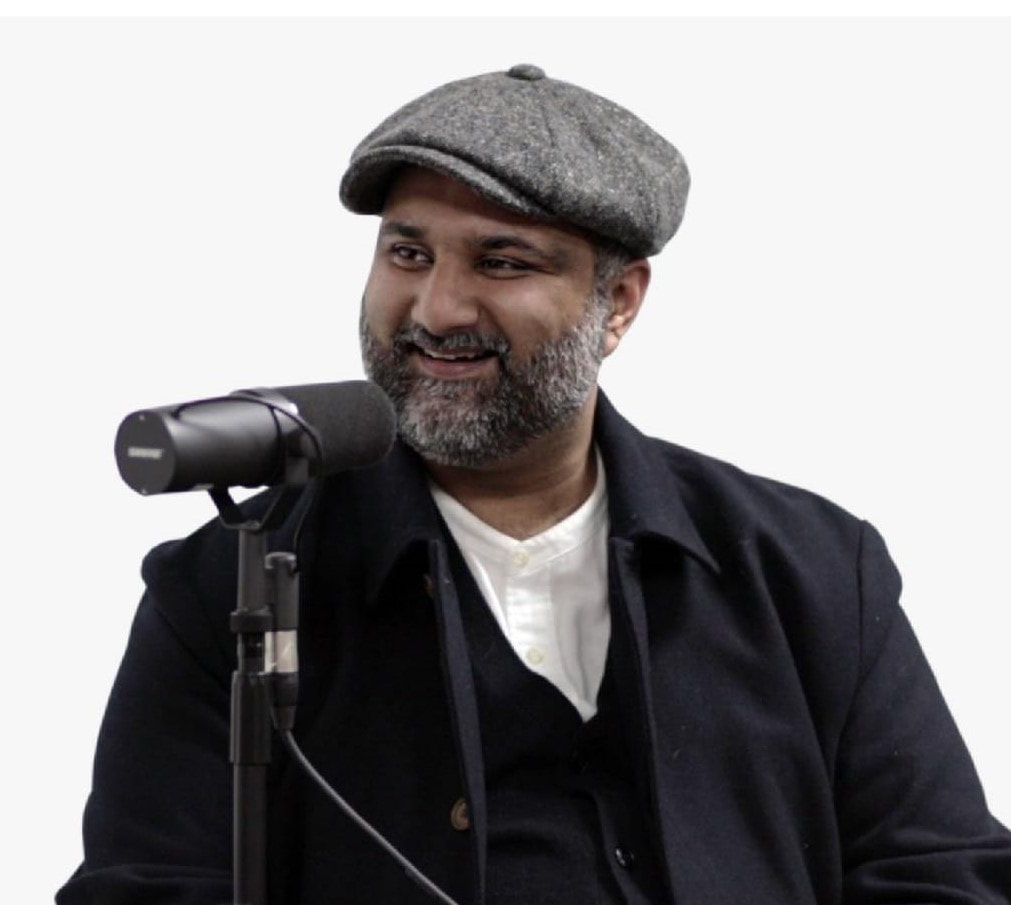
Faculty



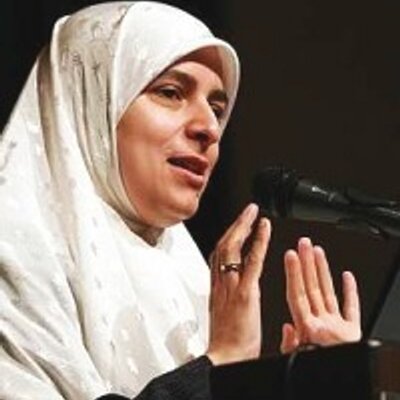

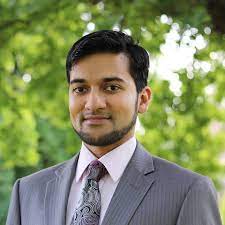
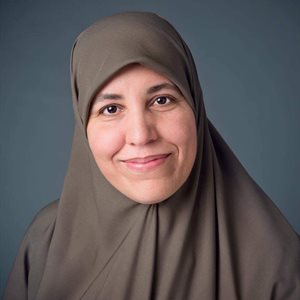

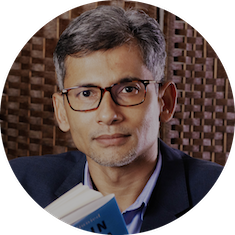




Coursework
Year 1 | Semester 1
Foundations of Islamic Studies (Orientation)
This is a mandatory virtual orientation course that is offered immediately prior to the beginning of the first semester. In this course, students will be introduced to the vision and methodology of the Program. They will become familiarized with essential terminology and concepts. The course will also be an opportunity to ground students in the principles of seeking knowledge which they are to keep with them as they embark on their journey.
History of Islam in Action: Revival and Reform
Instructor: Dr. Ovamir Anjum
This course explores the main stages of Islamic history after the death of the Prophet ﷺ until the present time, exploring the interplay of political, religious, and cultural elements and the developments of Islamic civilization. Students will investigate the historical evolution of the political, religious, and cultural institutions of Islamic civilization, including educational institutions and endowments, literature, science, philosophy and the visual arts, as well as their impact and place in broader history. By the end of the course, students will have a broad understanding of the history of Islamic civilization, from which they will be encouraged to draw lessons and inspiration for the contemporary world.
Students will study:
This course explores the main stages of Islamic history after the death of the Prophet ﷺ until the present time, exploring the interplay of political, religious, and cultural elements and the developments of Islamic civilization. Students will investigate the historical evolution of the political, religious, and cultural institutions of Islamic civilization, including educational institutions and endowments, literature, science, philosophy and the visual arts, as well as their impact and place in broader history. By the end of the course, students will have a broad understanding of the history of Islamic civilization, from which they will be encouraged to draw lessons and inspiration for the contemporary world.
Students will study:
- The effects, and material sources of the religious mission of the Final Prophet Muhammad ﷺ in the context of the seventh century world, starting with the era of his immediate successors.
- The creation, development, and evolution of the caliphate to Ottoman times.
- The contribution of some notable great leaders, ulama, and other notable men and women of Islam.
- The cultural exchange between Muslim and other civilizations.
- The reactions of Muslims to major onslaughts such as the Crusades, the Mongols, and European colonialism.
Tackling Advanced Questions in Islamic Theology: Past and Present
Instructor: Dr. Safaruk Chowdhury
This module will be an advanced level examination of the discipline of kalām (rational theology). It will cover the emergence and development of the discipline as well as the fundamental doctrines and core methodological principles guiding this approach to theology. Focus will then be on examining some of the major theological controversies that were debated throughout the first several centuries of Islamic thought and culture with detail analysis and evaluation of the ideas employed to construct arguments to support various Muslim beliefs and perspectives, whether of individual theologians or a particular theological school. The module will consist of a core primary text of kalām, in this instance the Ma’ālim uṣūl al-dīn (‘Signposts for the Fundamentals of the Faith’) of Fakhr al-Dīn al-Razī (d. 606/1210) as well as a set of additional readings materials that will form the guiding content of the lessons. In addition, each lesson will contain a discussion of a key philosophical idea related to the lesson topic with the aim of unpacking it for further examination and analysis. The aim behind reading core the primary text of kalām, the additional reading materials as well as the class discussions is for students not only to engage with the content but to appreciate the intellectual deliberations of Muslim theologians on the various complex theological questions they grappled with that are relevant today as they were centuries earlier.
This module will be an advanced level examination of the discipline of kalām (rational theology). It will cover the emergence and development of the discipline as well as the fundamental doctrines and core methodological principles guiding this approach to theology. Focus will then be on examining some of the major theological controversies that were debated throughout the first several centuries of Islamic thought and culture with detail analysis and evaluation of the ideas employed to construct arguments to support various Muslim beliefs and perspectives, whether of individual theologians or a particular theological school. The module will consist of a core primary text of kalām, in this instance the Ma’ālim uṣūl al-dīn (‘Signposts for the Fundamentals of the Faith’) of Fakhr al-Dīn al-Razī (d. 606/1210) as well as a set of additional readings materials that will form the guiding content of the lessons. In addition, each lesson will contain a discussion of a key philosophical idea related to the lesson topic with the aim of unpacking it for further examination and analysis. The aim behind reading core the primary text of kalām, the additional reading materials as well as the class discussions is for students not only to engage with the content but to appreciate the intellectual deliberations of Muslim theologians on the various complex theological questions they grappled with that are relevant today as they were centuries earlier.
Year 1 | Semester 2
Ummatics (Part 1): Foundations
Instructor: Dr. Ovamir Anjum
This course aims to strengthen the students’ connection to the Qur'an, Sunnah, and the Islamic tradition on the one hand and their grasp of the modern world on the other, for the purpose of winning the modern world for Islam by unifying and empowering the umma. Students engage in a structured critique of prevailing secular paradigms drawing on a critical engagement with the foundational sources of Islam, and emphasizing the synthesis of modern knowledge with Islamic traditions. This course highlights an ecumenical Islamic vision, bringing together shared values and principles from various Islamic perspectives. This integrative approach aspires to equip its students who are on their journeys to become scholars or practitioners in various fields into ummatic thinkers and leaders, equipped to address contemporary challenges faced by the Umma.
This course aims to strengthen the students’ connection to the Qur'an, Sunnah, and the Islamic tradition on the one hand and their grasp of the modern world on the other, for the purpose of winning the modern world for Islam by unifying and empowering the umma. Students engage in a structured critique of prevailing secular paradigms drawing on a critical engagement with the foundational sources of Islam, and emphasizing the synthesis of modern knowledge with Islamic traditions. This course highlights an ecumenical Islamic vision, bringing together shared values and principles from various Islamic perspectives. This integrative approach aspires to equip its students who are on their journeys to become scholars or practitioners in various fields into ummatic thinkers and leaders, equipped to address contemporary challenges faced by the Umma.
The Prophetic Sunna: Traditional and Critical Narratives
Instructor: Dr. Issam Eido
As the second legislative source of Islamic law, the Sunna and its preservation is a necessary component of the student’s knowledge. In this course, students will learn about the “story of the Prophetic Sunna”, through both traditional and modern-critical narratives. By the end of the course, students will have strong a grasp of how the Prophetic Sunna was preserved, how the science of ḥadīth developed, the critical narratives of Sunna preservation and pathways to countering such narratives.
As the second legislative source of Islamic law, the Sunna and its preservation is a necessary component of the student’s knowledge. In this course, students will learn about the “story of the Prophetic Sunna”, through both traditional and modern-critical narratives. By the end of the course, students will have strong a grasp of how the Prophetic Sunna was preserved, how the science of ḥadīth developed, the critical narratives of Sunna preservation and pathways to countering such narratives.
Removing the Fog From Qur’anic Variations (Intensive Module)
Instructor: Shaykh Yousef Wahb
Year 2 | Semester 3
Ummatics (Part 2): Revival
Instructor: Dr. Ovamir Anjum
This course aims to strengthen the students’ connection to the Qur'an, Sunnah, and the Islamic tradition on the one hand and their grasp of the modern world on the other, for the purpose of winning the modern world for Islam by unifying and empowering the umma. Students engage in a structured critique of prevailing secular paradigms drawing on a critical engagement with the foundational sources of Islam, and emphasizing the synthesis of modern knowledge with Islamic traditions. This course highlights an ecumenical Islamic vision, bringing together shared values and principles from various Islamic perspectives. This integrative approach aspires to equip its students who are on their journeys to become scholars or practitioners in various fields into ummatic thinkers and leaders, equipped to address contemporary challenges faced by the Umma.
This course aims to strengthen the students’ connection to the Qur'an, Sunnah, and the Islamic tradition on the one hand and their grasp of the modern world on the other, for the purpose of winning the modern world for Islam by unifying and empowering the umma. Students engage in a structured critique of prevailing secular paradigms drawing on a critical engagement with the foundational sources of Islam, and emphasizing the synthesis of modern knowledge with Islamic traditions. This course highlights an ecumenical Islamic vision, bringing together shared values and principles from various Islamic perspectives. This integrative approach aspires to equip its students who are on their journeys to become scholars or practitioners in various fields into ummatic thinkers and leaders, equipped to address contemporary challenges faced by the Umma.
Islamic Legal History
Instructor: Dr. Salman Younas
Where does Islamic law come from? Is it simply the brain-child of four founding jurists? What contributed to the rise of the four dominant schools of Islamic law? And what is exactly is a “legal school”? And why those four schools in particular? How did Muslim jurists adapt to changing political realities and what was the relationship between the law and the state and state actors? What does it mean when Islamic law is described as being constrained by taqlid (blind imitation), and how much truth is there to such narratives? To what extend did the role of Islamic law and the legal schools change with the advent of modernity?
Where does Islamic law come from? Is it simply the brain-child of four founding jurists? What contributed to the rise of the four dominant schools of Islamic law? And what is exactly is a “legal school”? And why those four schools in particular? How did Muslim jurists adapt to changing political realities and what was the relationship between the law and the state and state actors? What does it mean when Islamic law is described as being constrained by taqlid (blind imitation), and how much truth is there to such narratives? To what extend did the role of Islamic law and the legal schools change with the advent of modernity?
The Qur'anic Worldview: Truth and Da‘wa in The Qur'an (Intensive Module)
Instructors: Dr. Sharif El-Tobgui & Dr. Safaruk Chowdhury
The Qur'an is a book to be contemplated as much as it is a book to be recited. While we tend to think of our modern experiences and problems as new and unique, much of what we face today has been faced by peoples before us. The Qur'an narrates to us such events and offers statements of guidance and principles to help us navigate this world and its quandaries. This class is designed to ground students in a Quranic worldview and instill in them the values and principles that are to shape their scholarship, da‘wa, and activism.
The Qur'an is a book to be contemplated as much as it is a book to be recited. While we tend to think of our modern experiences and problems as new and unique, much of what we face today has been faced by peoples before us. The Qur'an narrates to us such events and offers statements of guidance and principles to help us navigate this world and its quandaries. This class is designed to ground students in a Quranic worldview and instill in them the values and principles that are to shape their scholarship, da‘wa, and activism.
Year 2 | Semester 4
Drawing a Blueprint for an Islamic Ethical Framework
The perfection of ethical behavior was at the core of the Prophet Muhammed’s mission (peace be upon him). In this course, students will be introduced to the ethical foundations of the Islamic message. While the blackletter of law of fiqh ensures a minimum attainment of human welfare, the ethical framework of Islam represents the full potential and actualization of an Islamic way of life. This framework shapes family life, politics, finance, medicine, and society at large. By the end of the course, students will be familiar with the ethical framework of Islam and will be equipped with the tools to engage in ethical reasoning to navigate questions they will certainly face in the future.
Research Methods
This course is intended to deliver to students the research tools and acquaint them with research methods they will use in their future scholarship. The Islamic library is vast and full of sources. A true scholar knows the genres of the Islamic library and how and when to refer to certain sources. Students will become acquainted lexical dictionaries, biographical dictionaries, indexes (fahāris), ḥadīth collections, legal manuals, and manuscripts. They will learn how to read, navigate, use, and cite such sources.
History of Islam in Southeast Asia (Intensive Module)
Instructor: Dr. Khairudin Aljuneid
Year 3 | Semester 5
Contextual and Occidental Studies
An introduction to the philosophies and ideologies born out of post-Enlightenment Europe. The class will introduce students to the moral, economic, and political theories that largely shape the world order and Western society today. Most importantly, students will have an opportunity to learn about the points of contact between such ideologies and Islam, where they converge and where they diverge.
Thinking Like a Faqīh
It is one thing to learn blackletter fiqh. It is another to think like a faqīh. In this course, the door will be opened to students to learn how jurists engage in legal reasoning. The course will examine the legal reasoning adopted by early jurists who reasoned by resorting directly to the Qur'an and Sunna. In addition, students will gain insight to how later jurists, who were often members of a school of law, reasoned through legal questions. By reading legal treatises, fatāwa, and legal debates, students will learn the art of fiqh and the various approaches to jurisprudence.
The Adab of Da‘wa and Islamic Scholarship (Intensive Module)
There is a certain etiquette to engaging in scholarship and da‘wa. The Muslim intellectual tradition is a diverse one, and the global Muslim community is even more diverse. As future thought leaders, students will learn how to deal with differences through adab al-ikhtilaf. They will also learn about the dangers that come with entering the public sphere and the world of scholarship, and they will come into contact with what scholars have said about these dangers, how to avoid them, and how to remedy the damage they may inflict.
Year 3 | Semester 6
Detoxing The Heart: Tazkiya and Tarbiya
It is the purified heart that distinguishes the rabbānī scholar. If service of Islam and Muslims is the ultimate goal of knowledge, then this cannot be done without a heart that is constantly being purified. In this course, students will learn about the diseases of the heart and their remedies. They will also learn about the tradition of taṣawwuf and tazkiya, its history, figures, and development. Students should come out of this class with a strong awareness of their heart, its diseases, and its remedies.
Fiqh in the Contemporary Context
A course that will discuss the shifts and changes in the Fiqhi landscape in the last one hundred years. Students will examine samples of fatwas responding to contemporary and unprecedented legal questions. They will also be introduced to the various trends and approaches to Fiqh that arose in the last one hundred years in response to modern developments.
Islamic Constitutionalism in the Late Ottoman Empire (Intensive Module)
Instructor: Dr. Yakoob Ahmed
Year 4 | Semester 7
Introduction to Ahl al-Kitab
The birth of Islam was a rebirth of tawḥīd and the message of the previous Prophets. Naturally, therefore, Islam bares genetic similarities to the two Abrahamic faiths that preceded it: Judaism and Christianity. Much of the Quran is a dialogue with the members of these two faiths. The Quran describes itself as continuation and confirmation of previous holy books. It thus necessary for students of knowledge ot have a working of knowledge of Judaism and Christianity (Ahl al-Kitāb), their histories, canonical books, sects, and creed. This course will offer students insight to these matters as well as the requisite knowledge to engage in independent research in the future.
Qur'anic Exegesis: Approaches, Trends, and Methodologies
A course that will introduce students to the genre of tafsir, its history, developments and evolution. The course will involve a journey through various tafsir texts to gain comparative knowledge of the various methods of exegesis and clashing approaches. The course will also involve an examination of “usul al-tafsir”, that is, the principles that guide the work of a mufasir.
Mastering Islamic Legal Maxims (Qawā'id Fiqhiyya) (Intensive Module)
Instructor: Amir Abu Ghudda
Year 4 | Semester 8
Directed Studies
A cornerstone of the Advanced Diploma curriculum is the final thesis, which every student is required to complete in order to receive certification. The thesis is an opportunity for students to specialize in a certain area and acquire in-depth knowledge on a certain question. Students should embark on the thesis with the intention that it serve as a foundation for a future scholarly publication. Students will begin planning and working on their thesis towards the end of their second year. In the final semester of the Program, students will be enrolled in one substantive course rather than two. In place of the second course, students will be offered Directed Studies. This is an opportunity for students to study privately with their research advisor and focus on the subject-matter of their choice in preparation for their thesis. This will allow students to further strengthen their knowledge in there area of their choice and will also help them in their research.
Pathways to Answering Modern Shubuhāt
At the final stage of the Program, students will have the opportunity to put into action all that they have learned. This course will be opportunity for students to confront the shubuhāt of today head on. The course will involve guest lectures by academics and scholars who have contributed to the tackling of shubuhāt. The course will introduce students to some of the most recent and strongest literature pertaining to modern-day shubuhāt and will give the students the chance to collectively reason through contentious questions and develop their own answers and responses.
History of Islam in the Horn of Africa (Intensive Module)
Instructor: Mohamud Awil Mohamed
The annual summer intensives will involve instruction in a wide variety of topics, including:
- Islamic Finance & Economics
- Islam, Gender, and the Family
- Islamic Political Thought and International Relations
- Working With Manuscripts
- Select Topics in Hadith Studies
- Maqāṣid al-Sharī'a
- Arabic Linguistics
- Select Topics in Fiqh
Fees & Tuition
The ADIL Program offers competitive tuition rates that seek to break barriers to knowledge. The ADIL Program is largely subsidized by the Centre for Islamic Knowledge. Rates are as follows:
Tuition per semester: $1,750 USD (total of $3,500 USD per academic year).
In-person sessions in Toronto, Canada: Students will be expected to fly in to Toronto, Canada at the beginning of each semester (a total of twice per year) for a weekend. Lodging and meals will be covered by the Centre for Islamic Knowledge.
Summer Intensive: Each year, a summer intensive will be hosted at an international destination. Students will also be expected to pay $1,000 USD to cover lodging and accommodations.
Prospective students who find the ADIL’s Program’s tuition and fees to be prohibitive are still highly encouraged to apply. While CIK cannot guarantee the availability of financial support, CIK will assess financial need on a case-by-case basis and seek to secure funding for such students.
Tuition per semester: $1,750 USD (total of $3,500 USD per academic year).
In-person sessions in Toronto, Canada: Students will be expected to fly in to Toronto, Canada at the beginning of each semester (a total of twice per year) for a weekend. Lodging and meals will be covered by the Centre for Islamic Knowledge.
Summer Intensive: Each year, a summer intensive will be hosted at an international destination. Students will also be expected to pay $1,000 USD to cover lodging and accommodations.
Prospective students who find the ADIL’s Program’s tuition and fees to be prohibitive are still highly encouraged to apply. While CIK cannot guarantee the availability of financial support, CIK will assess financial need on a case-by-case basis and seek to secure funding for such students.
Application Requirements
The Admission Committee values the diverse backgrounds and experiences of all Muslims interested in contributing to Islamic scholarship and serving their communities. As such, admission to the ADIL Program will be based on a holistic approach that takes into account all the applicant’s application material, credentials, and experience. A holistic approach means that the Admission Committee does not, for example, stipulate a minimum GPA, nor a formal and complete training in Islamic Studies. The presence of such credentials will certainly make an applicant more competitive. However, the Admission Committee seeks to take into account all of the applicant’s achievements, experiences, and goals when assessing their application. As such, a weakness in one part of the application may be compensated by a clear strength in another. Ultimately, the Admission Committee will assess, on a holistic basis, the applicant’s strength and the degree to which their objectives align with those of the Advanced Diploma in Islamic Scholarship and Leadership.
Minimum Requirements:
Undergraduate-level education: Applicants are required to have, at least, an undergraduate degree from a post-secondary institution. Applicants with higher degrees will be more competitive. Education in a specific field is not required. And while the Admission Committee does not stipulate a minimum GPA (as part of its holistic approach), a strong academic performance will make for a more competitive application.
Intermediate-level Islamic knowledge: While it is not a requirement for applicants to have trained in Islamic Studies at a formal institution, intermediate proficiency in Islamic sciences is expected, and advanced proficiency is desirable. The Admission Committee will pay particular attention to the core sciences, such as: Fiqh, Ḥadīth, and ‘Aqīda.
Arabic proficiency: As a benchmark, applicants are expected to be able to read and comprehend a text such as Tafsīr Ibn Kathīr with occasional use of a dictionary. Applicants will be expected to demonstrate their language proficiency in an Arabic assessment interview. The details of the assessment will be provided to applicants in due course. An applicant who does not satisfy the Arabic-proficiency requirement may still gain admission to the ADIL Program for the following admission round on the condition that the applicant achieve satisfactory Arabic-proficiency.
Minimum Requirements:
Undergraduate-level education: Applicants are required to have, at least, an undergraduate degree from a post-secondary institution. Applicants with higher degrees will be more competitive. Education in a specific field is not required. And while the Admission Committee does not stipulate a minimum GPA (as part of its holistic approach), a strong academic performance will make for a more competitive application.
Intermediate-level Islamic knowledge: While it is not a requirement for applicants to have trained in Islamic Studies at a formal institution, intermediate proficiency in Islamic sciences is expected, and advanced proficiency is desirable. The Admission Committee will pay particular attention to the core sciences, such as: Fiqh, Ḥadīth, and ‘Aqīda.
Arabic proficiency: As a benchmark, applicants are expected to be able to read and comprehend a text such as Tafsīr Ibn Kathīr with occasional use of a dictionary. Applicants will be expected to demonstrate their language proficiency in an Arabic assessment interview. The details of the assessment will be provided to applicants in due course. An applicant who does not satisfy the Arabic-proficiency requirement may still gain admission to the ADIL Program for the following admission round on the condition that the applicant achieve satisfactory Arabic-proficiency.
Application Procedure
Application Procedure:
Step 1: Begin Filling Out the Application Form
Start your application by filling out the application form. In this form, you will submit your information and application materials (see the Application Materials section below). You will have the ability to save your progress and return to the form at your convenience.
Step 2: Complete Application Form and Submit Required Documents (deadline: August 1, 2024)
Make sure that you have inputted all your information accurately and completely. Upload all required documents. Once you are confident that you have submitted all the necessary information and materials, submit your form before the deadline.
Step 3: Interview
Within a few weeks of receiving the application form, the Admission Committee will update each applicant about the status of their application. Shortlisted students will be invited to a virtual interview. Details of this interview will be provided in due course.
Step 4: Arabic Assessment Interview
Following the first interview, shortlisted applicants will be invited for a virtual Arabic assessment interview. The details of the assessment will be provided to applicants in the course of the admission process in order to give them adequate time to prepare.
Start your application by filling out the application form. In this form, you will submit your information and application materials (see the Application Materials section below). You will have the ability to save your progress and return to the form at your convenience.
Step 2: Complete Application Form and Submit Required Documents (deadline: August 1, 2024)
Make sure that you have inputted all your information accurately and completely. Upload all required documents. Once you are confident that you have submitted all the necessary information and materials, submit your form before the deadline.
Step 3: Interview
Within a few weeks of receiving the application form, the Admission Committee will update each applicant about the status of their application. Shortlisted students will be invited to a virtual interview. Details of this interview will be provided in due course.
Step 4: Arabic Assessment Interview
Following the first interview, shortlisted applicants will be invited for a virtual Arabic assessment interview. The details of the assessment will be provided to applicants in the course of the admission process in order to give them adequate time to prepare.
Rolling-Basis Applications
Admission to the ADIL Program is offered on a rolling basis. This means that the Admission Committee will assess applications as they are received instead of evaluating all applications at once after the deadline. Considering the small cohort, applicants are highly encouraged to submit their applications as soon as practicable to maximize their chances of admission to the ADIL Program.
Admission to the ADIL Program is offered on a rolling basis. This means that the Admission Committee will assess applications as they are received instead of evaluating all applications at once after the deadline. Considering the small cohort, applicants are highly encouraged to submit their applications as soon as practicable to maximize their chances of admission to the ADIL Program.
Application Materials:
- Personal Statement: A personal statement of no more than 750 words. The statement should address intellectual interests, academic and professional background, community service experience, professional / scholarly / khidma (service) objectives, and the reasons for applying to the ADIL Program.
- Transcripts: Applicants must submit transcripts from all post-secondary institutions attended.
- Two Letters of Recommendation: These are to be submitted by the references you list in the application form. The references will be contacted and informed of the steps to submit recommendation letters. Recommendation letters are due: August 8, 2024.
- Writing Sample: Please upload a writing sample of 7-10 pages (double-spaced). While the writing sample is optional, it is highly recommended for students to upload a writing sample.
- Personal CV
Program Structure
Students will be enrolled in two courses per semester. Each semester will begin with a weekend of in-person instruction in Toronto, Canada, during which the first six hours of class time for each course will be conducted.* From that point onwards to the end of the semester, each course will involve two hours of virtual instruction per week. Class will be held on Saturday and Sunday, accommodating North American and European time zones. Virtual classes will continue for twelve weeks. By the end of the semester, each course would have involved six hours of in-person instruction (at the start of the semester) and twenty-four hours of virtual instruction, making for a total of thirty hours of class time.
In addition to the two courses of the semester, students will be enrolled in one intensive module per semester to augment their studies. The intensive module will span six hours. These intensive modules will be dedicated to special topics that will broaden students’ horizons and complement their main studies with a deeper and broader examination of topics of interest.
During the summers, students will be invited to a nine-day summer-intensive at an international destination. There will be a total of three summer intensives. The intensives will be an opportunity to explore new subject-areas taught by top instructors. It will also be a great window for students to become acquainted with the global network of Muslim scholars.
In addition to the two courses of the semester, students will be enrolled in one intensive module per semester to augment their studies. The intensive module will span six hours. These intensive modules will be dedicated to special topics that will broaden students’ horizons and complement their main studies with a deeper and broader examination of topics of interest.
During the summers, students will be invited to a nine-day summer-intensive at an international destination. There will be a total of three summer intensives. The intensives will be an opportunity to explore new subject-areas taught by top instructors. It will also be a great window for students to become acquainted with the global network of Muslim scholars.
Four Years (Two Semesters Per Year) |
Two Courses Per Semester |
Thirty Hours of Instruction Per Course |
One Intensive Module Per Semester |
Three Summer Intensives |
*While the ADIL Program welcomes applications from around the globe, students will be responsible for making the necessary visa and travel-related arrangements in order to attend the in-person sessions in Toronto, Canada. Due to limited resources, CIK is unable to facilitate visas for students. The same consideration applies to the summer intensives that will be held in international destinations.
FAQs
Is this an online program?
The ADIL Program employs a hybrid virtual/in-person model. While most class time is virtual, the first six hours of each class will be held in-person in Toronto, Canada on a weekend. Instructors will be flown in and students are expected to attend these in-person sessions. This will be an opportunity for students to kick off the semester by meeting their teacher and fellow classmates. For the remainder of the semester, classes will be held virtually. The nine-day summer intensives are in-person and will be held at an international destination.
How much of a time-commitment is the ADIL Program?
The ADIL Program is a four-year part-time program. We have deliberately designed the program to accommodate the schedules and commitments of professional Muslims. Two courses will be offered per semester. Each course will involve two hours of virtual instruction per week. Class will be held on Saturday and Sunday between 9:00 AM and 11:00 AM EST. There will also be one six-hour virtual intensive module per semester.
How is this different from a typical Islamic seminary?
The ADIL Program is not intended to teach the basic Islamic sciences or give foundational knowledge. We expect students to have already acquired intermediate knowledge in core Islamic sciences as well as Arabic proficiency. The ADIL Program is designed to refine students’ knowledge and equip them with critical thinking and research skills in a manner that mirrors graduate programs. This is achieved by giving students access to world-class instructors who combine traditional knowledge with academic rigour and modern research techniques.
How expensive is the ADIL Program?
The ADIL Program prides itself on being very affordable. This is part of CIK’s commitment to breaking barriers to seeking knowledge. As of today, each semester of the ADIL Program involves a tuition fee of $1750 USD. This does not include travel costs to Toronto, Canada for the in-person sessions nor the summer intensives.
Prospective students who find the ADIL’s Program’s tuition and fees to be prohibitive are still highly encouraged to apply. While CIK cannot guarantee the availability of financial support, CIK will assess financial need on a case-by-case basis and seek to secure funding for such students.
Prospective students who find the ADIL’s Program’s tuition and fees to be prohibitive are still highly encouraged to apply. While CIK cannot guarantee the availability of financial support, CIK will assess financial need on a case-by-case basis and seek to secure funding for such students.
I don’t think my Arabic is strong enough. Can I still apply?
Yes. Even if your Arabic proficiency is not at the requisite level, you may still gain conditional acceptance to the ADIL Program. This means that you would be admitted to the next cohort, provided you attain the requisite Arabic proficiency.
Is the ADIL Program accredited?
The ADIL Program focuses on attracting students who are seeking knowledge and are passionate about it. The ADIL Program does not have its objective of securing employment opportunities for its alumni (especially considering that many would have already received an undergraduate-level education at the very least and are likely to be working professionals). The ADIL Program aims to take students of knowledge to the next level and give them what they need to become prolific scholars and effective leaders. In addition, considering the unique objectives of the ADIL Program, CIK requires a degree of freedom to design and teach a curriculum that serves its objectives. Accreditation would highly limit CIK's ability to achieve the unique objectives of the ADIL Program. Consequently, the ADIL Program is not accredited.
I already studied Islamic Studies elsewhere. How does the ADIL Program help me?
If you have already studied Islamic Studies, we strongly encourage you to apply. The ADIL Program is a great way to refine your research skills, critical thinking, familiarize yourself with the academic literature, and fill in gaps in knowledge. By studying with leading Muslim academics, you will be able to combine your traditional knowledge with the tools needed to produce high-quality Islamic scholarship.
Will CIK help me acquire a visa to attend the in-person sessions in Canada and the summer intensives?
While CIK strives to facilitate what it can for its students, students of the ADIL Program will be responsible for all visa arrangements.
What about accommodations during the in-person sessions and summer intensives?
As for the in-person sessions in Toronto, Canada, at the beginning of each semester, students are expected to cover their own flight costs. Once in Toronto, CIK will cover all lodging and meals.
As for the summer intensives, students are expected to cover their flight costs. The summer intensives will also involve a fee in order to cover lodging and meals.
As for the summer intensives, students are expected to cover their flight costs. The summer intensives will also involve a fee in order to cover lodging and meals.